Serving McKinney
Foundation Crack Inspection in McKinney
Call us for a free foundation crack inspection estimate
Serving McKinney
Call us for a free foundation crack inspection estimate
A visible crack is only the starting point. In Allen, the more useful question is whether the foundation is still moving because of clay shrinkage, poor drainage, plumbing leaks, tree roots, or an older repair that has lost support. That requires more than looking at drywall and guessing.
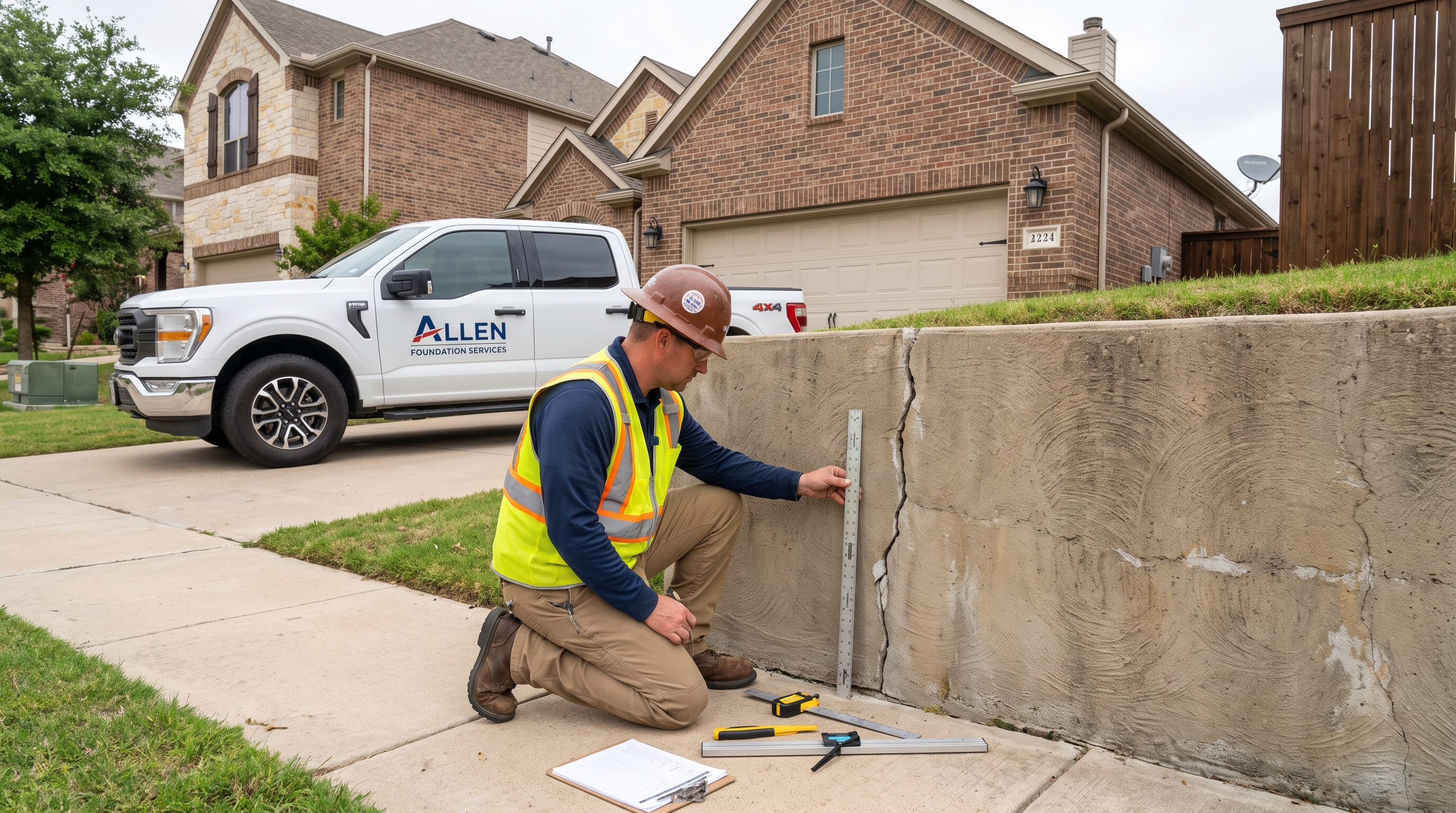
A proper crack inspection compares interior symptoms with exterior evidence. Diagonal cracks above doors, stair-step brick cracks, separated trim, sloped floors, garage slab cracks, and gaps at the ceiling line all point to different stress patterns. The contractor should also walk the perimeter to check soil pullback, negative grade, gutter discharge, irrigation coverage, and erosion near slab edges.
Elevation readings can show how much the slab varies from room to room. Those measurements help separate a stable cosmetic crack from differential settlement that may need piers, drainage correction, or monitoring. On post-tension slabs, the inspection also protects against repair plans that require cutting without understanding cable locations.
The goal is a written repair path: monitor, seal, inject, improve drainage, level, or underpin. Allen homeowners preparing to sell should keep that documentation because buyers and inspectors will ask what caused the cracking and whether movement has been addressed.
McKinney has a wide mix of slab homes, from older central neighborhoods to newer subdivisions stretching toward US 380 and the Collin County growth corridor. Many of those homes sit on the same expansive clay that affects Allen, so drought and heavy rain can create movement along corners, garage edges, and long exterior walls.
McKinney homeowners often notice stair-step brick cracks, doors rubbing at the top, tile cracks through kitchens or entries, and separation at trim after a dry summer. Homes near drainage easements, sloped lots, or areas with newer landscaping can see uneven moisture around the slab.
A McKinney foundation estimate should include elevation readings, drainage review, crack classification, and a repair plan that explains whether the home needs monitoring, crack repair, piers, leveling, or moisture correction. Documentation is especially useful in active resale areas where inspectors quickly flag foundation history.
Crack repair without measurement can miss active slab movement. The contractor match focuses on documenting the structure before recommending injection, piers, leveling, or drainage changes.
Blackland clay behavior is part of the inspection, not an afterthought. The estimate should explain how moisture cycles around the home are affecting the foundation.
Get the crack measured before deciding whether it is cosmetic or structural.
Free — no obligations