Serving McKinney
Pier Installation in McKinney
Call us for a free pier installation estimate
Serving McKinney
Call us for a free pier installation estimate
Piers are used when part of the slab has settled beyond what crack repair or drainage correction can reasonably fix. In Allen, the problem usually starts when expansive clay shrinks during drought and pulls support away from the perimeter. The home loads then need a deeper, more reliable bearing point.
Common pier systems in North Texas include pressed steel piers and helical piers, selected based on load, access, soil conditions, and engineer or contractor recommendation. The pier is installed below the active clay zone until it reaches competent bearing strata, then a bracket transfers the home's weight onto that support.
Installation planning matters because many Allen homes have landscaping, driveways, patios, utilities, and post-tension slabs. Access pits need to be located carefully, and the lift plan should be controlled. Aggressive lifting can crack finishes, bind plumbing, or stress areas that are not part of the original problem.
Pier work should come with a clear scope, pier count, locations, warranty terms, and documentation that helps future buyers understand what was stabilized. For homeowners preparing to list, that paper trail can be as important as the repair itself.
McKinney has a wide mix of slab homes, from older central neighborhoods to newer subdivisions stretching toward US 380 and the Collin County growth corridor. Many of those homes sit on the same expansive clay that affects Allen, so drought and heavy rain can create movement along corners, garage edges, and long exterior walls.
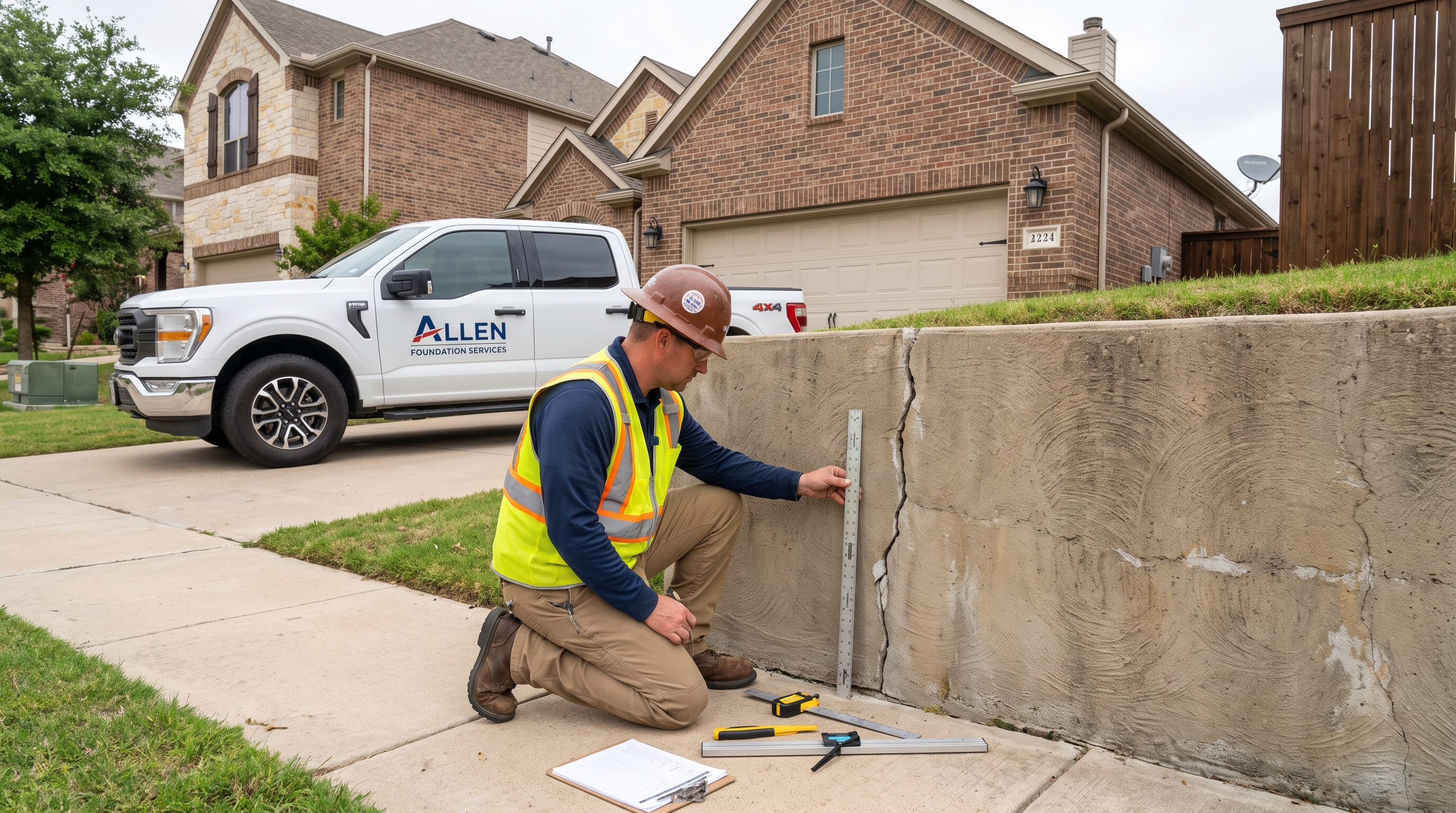
McKinney homeowners often notice stair-step brick cracks, doors rubbing at the top, tile cracks through kitchens or entries, and separation at trim after a dry summer. Homes near drainage easements, sloped lots, or areas with newer landscaping can see uneven moisture around the slab.
A McKinney foundation estimate should include elevation readings, drainage review, crack classification, and a repair plan that explains whether the home needs monitoring, crack repair, piers, leveling, or moisture correction. Documentation is especially useful in active resale areas where inspectors quickly flag foundation history.
Homeowners should know what each pier is doing. The contractor match emphasizes pier locations, bearing depth, bracket placement, and warranty coverage in the written scope.
Post-tension slabs, irrigation lines, patios, and tight side yards all affect pier access. The estimate should identify those constraints before excavation begins.
Request a pier estimate that includes locations, method, and warranty language.
Free — no obligations